Thursday, 25 August 2011

Ceridwen, Devon – Sun 3rd – Sun 10th July

Hello everyone. We have got really behind with this blog, oops! Never mind, we shall try and catch up soon!

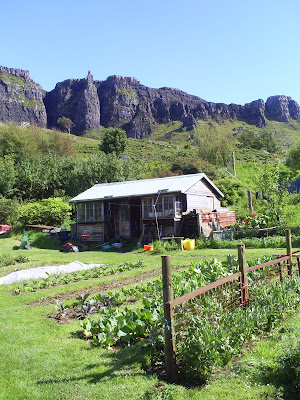
We spent a great week at the start of July at Ceridwen, a wonderful smallholding near Holsworthy in Devon. It’s only 3 acres but incredibly productive with veg beds, 3 polytunnels, greenhouses, herbs, chickens, ducks, goats, nut trees and an orchard.

From Ceridwen Photos

Its owners, Rob and Diana, bought it 14 years ago and have turned what was originally one blank field into a very carefully thought out, sheltered and well zoned smallholding. The way it’s laid out and run is based on permaculture principles so everything is designed to give maximum yield with minimum input. (We are going on a 2 week permaculture course at the end of August and are really looking forward to really deepening our understanding of this essential approach.)

From Ceridwen Photos

Rob sells his produce each Friday at market, so the week has a regular rhythm of:

• Sat – Wed: sowing, planting out, weeding etc.
• Thurs: harvesting and boxing the produce ready to go. Here we are digging, picking, sorting etc

From Ceridwen Photos

From Ceridwen Photos

From Ceridwen Photos

• Fri: market – a long day with a 6am start – Adam did this!
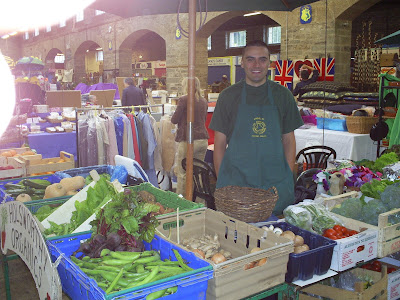
From Ceridwen Photos

Diana is a medical herbalist, so sections of the garden are given over to lots of different familiar and less familiar herbs – chamomile, sage and borage being ones we could recognize. Diana taught us how to make tinctures (liquid medicines made by soaking plants in an ethanol/water mixture to extract their active ingredients) using Verbain, Borage and Californian Poppy.

From Ceridwen Photos

She has a peaceful treatment room full of lotions, potions and amazing books and with a lovely leafy view out over the vegetable beds. The presence of all the flowers made the garden a really lovely place to wander around – and to buzz around for all the bees.

Rob and Diana couldn’t have been warmer, kinder and more willing to share their abundant knowledge with us – things we learnt included:

• How to make a raised veg bed that is mega fertile, with no digging involved at all – bonus!
• The wonderful benefits of home made comfrey juice as a fertilizer
• How to choose where to place your orchard, water systems and veg beds
• How to make yoghurt from their goat’s milk
• The best way to plant out leeks and cabbages

Here's Adam taking it easy as he tops and tails leeks ready for planting out:

From Ceridwen Photos

WWOOFers are really essential for this smallholding as there is so much to be keeping on top of the whole time. This was great for us as it felt that we were really needed, and that each job we did was very focused and productive. Rob said that the nature of WWOOFers has changed over the years from foreign students wanting to learn English to lots more couples like us who are WWOOFing with a view to having their own smallholding one day.

The lovely Mulberry tree by Diana's treatment room:

From Ceridwen Photos

Finally we can’t rate Rob and Diana’s library and conversation highly enough! There were walls and walls of books on everything, including lots on peak oil, sustainability, growing, food and climate change. Rob has very strong views on our economic state, peak oil, resource depletion etc etc so there was lots of in depth talking about the state we’re in. So not only did we learn loads of practical stuff here, we had meal after meal of good intellectual debate – Rob puts great store by ensuring that you keep your intellect alive to balance the practical nature of outdoor work – this is a great concept to take away with us, the importance of what he called ‘the life of the mind’.

Finally on the day we left, as we were waiting for our next hitch (we have been getting lots of great lifts!), we found ourselves by a field with this irresistible photo opp...

From Ceridwen Photos

Monday, 25 July 2011

Tir Y Gafel (Lammas), Wales – Sun 19th June – Fri 1st July

We had an amazing fortnight at this amazing eco village in Pembrokeshire. Quite the most inspiring project we have visited so far…despite being the most hard core in terms of living conditions – think tents, no showers, wet welsh rain and a slug on the face at 6am being Rosie’s favourite moment!

Tir Y Gafel (pronounced Tier A Gavel) is the name of this pioneering community/eco village, made up of 9 households (total of 17 adults, 18 kids) who got together to buy a large chunk of land, about 80 acres, on which to build homes, grow food/fuel and rear animals. They have allocated some land for shared woodland and some for a shared community hub building, the rest has been divided up into plots of between 5-7 acres.

This is the hub building, which is getting close to being finished.

From Tir Y Gafel (Lammas)

Each household will build their own low impact home, or eco-house on their plots and have veg gardens, polytunnels, chickens, other animals etc. They started work in late 2009, therefore are 18 months into the process and so far the majority of plots boast a barn or workshop. Doing a barn or workshop first is great as it acts as a practice building, one they can make mistakes on, before they build their actual home!

From Tir Y Gafel (Lammas)

Our first week was spent with a lovely family, Nigel, Cassie + their three kids. They’ve got a pink, strawbale/cob (a mix of clay/sand/earth/straw) roundhouse with a turf roof – a building that is really cool in summer and cosy in winter - a big pit dug ready to be a natural swimming pool, a wonderful veg plot and lots of willow all round the site. It’s a really lovely feeling plot.

From Tir Y Gafel (Lammas)

The main things we did work-wise were:

• We helped start the dry stone wall for the first side of their walled garden

Here's Adam levelling out the foundation gravel, caber styley...

From Tir Y Gafel (Lammas)

• We built a section of their chimney using reclaimed bricks and stone

From Tir Y Gafel (Lammas)

• We did some ever necessary weeding and put cardboard and muck mulch round the pumpkins
• Rosie did a little bit of scything – a lovely, rhythmic way to cut grass

From Tir Y Gafel (Lammas)

We’re going to go back in August and help them to build their first ‘proper’ house, which will be a straw bale build for their teenage son. Can’t wait!

Our second week was spent with a really inspiring couple called Jane and Andy who are veg growers extraordinaire and who are approaching the project with incredible integrity in so many ways, particularly in their commitment to sourcing everything they use, eat or build with as locally as possible. They have worked really hard to put in loads of raised beds on their plot which amazingly provided them with 18% of their total food in year one, when just starting off. They are one of four plot holders who are going to be building terraced houses, as an alternative model to the detached house Cassie and Nigel will be building.

We were mainly there to help with their barn which is built with a timber frame, hay bales and lime render.

The jobs we helped with were:
• replacing a rotten bale under a window

From Tir Y Gafel (Lammas)
• rendering parts of the outside and the inside with lime render

From Tir Y Gafel (Lammas)
• dry stone walling some beautiful sun segment type flower beds to-be. Adam having learnt this at Laurieston created lovely looking walls, while Rosie’s attempts were still resembling bad teeth even by the end of the week!
• putting a frame in for a raised veg bed

Adam was able to put his carpentry skills to the test by making a window sill – this was to replace one that had let water in and caused the rotten bale.

From Tir Y Gafel (Lammas)

Replacing the bale involves lots of steps, including

1 - whacking it in with comedy mallet

From Tir Y Gafel (Lammas)

2 - giving it a good hair cut

From Tir Y Gafel (Lammas)

3 - Starting to layer up the render (this is our host Jane hard at work)

From Tir Y Gafel (Lammas)

For the render we had great fun mixing up the lime and sand in the lime pit, jumping around in limey wellies to get it all combined. The undercoats have a bit of hay mixed in with them, and the top coat had yak’s hair which makes it a smoother finish for the final look.

From Tir Y Gafel (Lammas)

It’s amazing coz you apply it with your hands so it’s a really one-to-one-contact-with-the-building kind of plastering – you push it on and up with the heel of your hand to get all the air out, and then you ‘float’ the final coat with your hands too to smooth it off. The final look is great.

Jane and Andy chose hay bales, rather than straw bales, as they were available very locally and they are trying to get everything from within 5 miles. Having experimented with hay they have decided that they will be using straw for their actual house! The main reason seems to be that the render doesn’t stick to hay as well as it does to straw which leads to the water tightness of the bales being compromised and to it needing to be re-rendered too often.

Over our fortnight we also did lots of lovely fun non worky things like…

• Sitting round a camp fire a couple of nights, chatting to other plot holders about their plans and supping welsh ale
• Eating lots of wonderful meals – Jane’s bahjis and bara brith were things of true beauty!
• Taking a bath in a cob bath, a tub which is heated by a fire chamber underneath – lighting it 2 hours ahead of bathtime is essential!

Here's Rosie using a tent pipe to get the fire going...

From Tir Y Gafel (Lammas)

• Hearing hilarious stories about MI6 sending undercover investigators to ‘volunteer’, trying to suss out if this eco village is a plan to overthrow the government!
• Going for one deeply wonderful hot shower at the local swimming baths on Thursday – it costs £2.20 to get yourself clean these days.
• Having heaps of daft fun with kids and adults alike – dens, frisby, games, bikes and the rest!
• Enjoying a wide variety of compost loos - Jane and Andy's loo had this totally amazing view!

From Tir Y Gafel (Lammas)

As an overall community they are doing brilliantly, to have got planning permission for this village, to be 100% on site and all in the process of building, really is a feat. This isn’t to say there aren’t still issues like the hub building’s construction running over schedule, sharing out of the site’s water supply, the public interest and tours being intrusive on their lives sometimes and building regulation officers giving them a hard time as they build these unconventional building.

Our overall impression is that this is an incredible bunch of people, from all walks of life – engineers, teachers, craftspeople, builders – who have all made the decision that they want to live more simply, back on the land, with less impact on the planet and with more support for each other. We came away from this fortnight full of ideas and enthusiasm for community living that has the right balance between personal space and neighbourly support when you need it.

Thursday, 7 July 2011

Isle of Eigg - Scotland (Thurs 9 June to Mon 13 June)

Stop the press!! We have fixed the blog so that you can comment on any of our wonderful, hilarious or downright daft exploits. Just click in the comment box at the bottom of any post and let us know what you think!

Oh dear, we are starting to get a little bit behind now – too much time spent up to our elbows in lime plaster at the eco village we were at for the last fortnight – that post will follow swiftly on the heels of this one to catch us up!

Anyway…

Q when is an Egg not an Egg?
A when it’s a west coast of Scotland island, entirely owned by its residents, called Eigg!

From Island of Eigg

So, casting our minds back three weeks or so we spent a long weekend wwoofing on a typical Eigg croft, owned and farmed by Neil and Sue.

Eigg is a little island just off the west coast of Scotland, one of the inner Hebrides. It is maybe 4 miles across and we’re not sure how long – we walked from one side to the other in just over an hour. The croft we were working on was made up of land stretching in a strip from the sea, around the house and travelling on up to the dramatic cliffs behind.

From Island of Eigg

Our work mainly involved helping out in the garden – working on the potatoes, the poly tunnel and veg beds.

Here's Rosie getting to grips with a willful rotavator...

From Island of Eigg

In the foreground/right of this photo you can see the peas were climbing up old spring bedsteads - a genius idea!

From Island of Eigg

From Island of Eigg

This croft was undoubtedly one of the most beautiful settings we have been to so far – we were on the west side of the island, looking towards the dramatic profile of Rum and getting fabulous sunsets over it most evenings. We were also blessed with the kind of sunshine that Visit Scotland puts in its adverts, turning the sea aquamarine and the land vivid green.

From Island of Eigg

From Island of Eigg

If you want to go visit then we can totally recommend camping at Neil and Sue’s place – or staying in their lovely little yurt or bothy – they’ve got it all set up for the most stunning camping, cycling, walking base – you can see more here.

We wanted to visit Eigg as it’s a very rare community set up – an island that is owned by everyone who lives on it – it became theirs 14 years ago when all the residents at the time decided to buy it after having suffered at the hands of absent, uninterested or insolvent landlords for too many years. There were about 60 people at the time, and now there are 85 – 90 people living there. Lots of Scotland’s small islands have times when they teeter on the edge of population collapse but Eigg is now thriving and growing.

The most overt community endeavour that the residents of Eigg have initiated is a renewable energy electricity grid, to replace the diesel generators that scattered the island, pre buy-out. The electricity is generated by hydro, photo voltaic and wind turbines and is transmitted round the island. Each household cannot use any more than 5kW at any one time (kettle = 2kW, few lights = 0.5kW, tv = 0.2kW etc so it’s a reasonable amount) and if the supply is running low an email goes round to everyone to try and reduce use. Each household has a monitor in it so they can all keep an eye on usage.

Our caravan was entirely off grid...but reliant on the good old bottles of gas!!

From Island of Eigg

Other aspects of life that arise from it being a conscious community include residents meetings, a couple of work cooperatives to do things like timber and construction, bulk orders on food and annual celebrations of their autonomy. We were actually lucky enough to be there on the weekend of the 14th anniversary party – so lots of people had come on the boat for the celidh on the Saturday night!

From Island of Eigg

From our very brief stay it seems that living as part of the Eigg community isn’t so very different from agricultural life on any other Scottish island, in terms of day to day life. When it’s time to take your animals to market you have to get them on a boat, and if a new bull is needed for breeding he is brought over on a boat too. Each family has their own house, the kids all go to the island school for primary and mainland for secondary, there’s a shop, there’s the boat and there are get togethers and there are times when you just get on with your own thing.

There is the sense that they would survive better than most if oil price rises reduced the frequent arrival of the boat – most people on the island were involved in growing or rearing a proportion of their own food. For us the most significant aspect of community life was the energy set up and the sense of shared responsibility for the future development of island life.

Sunday, 12 June 2011

Brithdir Mawr (Mon 23 May - Fri 27 May)

The latest stop on our journey found us in beautiful, and sunny, Pembrokeshire in West Wales at a warm and relaxed community called Brithdir Mawr. Brithdir is currently made up of 8 adults and 4 kids who live on and run this 80 acre farm together. This is the 150 year old farmhouse.

From Brithdir Mawr photos


Here's us, up the top of the hill behind the farm.

From Brithdir Mawr photos

They are such a warm and welcoming group, eating together often, getting on very well and showing how nice it can be in a small, almost family-like community set up. They have cooking, eating, laundry and hanging-out space in the main house, and most of them also have their own private living spaces in converted stables, barns etc. Here's the lovely courtyard that most of their houses open onto.

From Brithdir Mawr photos
They all pay rent and do 2-3 days community work a week on the farm. Most of them earn money through outside jobs too.

The main things that they work on are:
• growing an enormous number of vegetables and fruit – the polytunnels are amazing!

From Brithdir Mawr photos

• managing the woodlands – they recently planted 4000 trees
• cutting, storing and ensuring their wood supply – they plan to produce all their own wood by 2018

From Brithdir Mawr photos

• looking after the goats/chickens/ducks/horses

From Brithdir Mawr photos

From Brithdir Mawr photos
• maintenance of the buildings

The defining feature that sets Brithdir apart from the other places we have visited so far is that they are 100% off grid, i.e. they are not getting any electricity, gas or water from any mains supply. Phenomenal!

So, how do they do it? Well…

• Electricity is generated via a small wind turbine, photo voltaic (PV) solar panels and a hydroelectric (water powered) turbine – it is then stored in big old submarine batteries.

From Brithdir Mawr photos

There’s a little display meter in the hall giving everyone a constant awareness of how much electricity there is – this awareness translates into behaviour such as only using the washing machine if there’s lots of power in the batteries, all watching a film together in the same room of an evening if it’s running low. The supply can be inconsistent which means they don’t have a fridge or freezer.

• Hot water comes from a massive wood burning kitchen range that heats water as well as cooks, and from solar panels. If there’s lots of hot water the word goes round to make the most of it!

From Brithdir Mawr photos

• Heating comes from wood burning stoves in each room.
• Water comes from a spring. There are two outside compost loos, and the inside loo is literally just a water closet - here's the romantic looking compost loo!

From Brithdir Mawr photos

Cooking on the kitchen range was one of the real highlights of our time there – it was incredible to have to actually load it up with wood to give yourself a piping hot oven and hob. It took a couple of hours to get up to cooking temperature and then we were able to do a meal for 10 no problem at all, with regular re-loading of the fire compartment.

From Brithdir Mawr photos

From Brithdir Mawr photos

As we said the range also heats the water, so there is loads of hot water after a meal has been cooked and ‘chef’s privilege’ is to get first dibs on it! The showers we had after cooking felt amazingly connected, because we knew the water was hot because we’d physically loaded the wood into the stove.

The gardens produce so many delicious vegetables meaning that a large proportion of each meal is either picked fresh or taken from the impressive array of preserved food that lined the shelves in the hall. Not having a fridge or a freezer means that lots of pickling, jamming, chutneying and drying gets done - there was a very impressive array of onions hanging in the hall while we were there. Dairy products, including the fresh goats milk (which tasted very mild) are kept in the old pantry, which being on the north side and stone flagged was designed for just this purpose.

The other great highlight for Rosie was to work with a working horse - a handsome old man called Samson – dragging timber out of a wood.

From Brithdir Mawr photos

Before we started doing the work we had to trim his hooves – a great skill to learn.

From Brithdir Mawr photos

It requires a fair bit of bravery and strength – brave because you worry that you’re going to hit a nerve and strong to stop the horse leaning right onto you – but Samson was very patient with Rosie!

Overall this was a really wonderful place to visit, with lots of generosity shown to us in terms of welcome, food and time spent teaching us stuff. The stunning setting, the productive land, the friendly atmosphere and the strong commitment to reducing their footprint make this a great example of how good community living can be.

Wednesday, 25 May 2011

Smiling Tree Farm – (Sun 15 May – Mon 23 May)

Couple of wee things before we start:
• We’ve updated the schedule page with all of June’s gigs
• If you click on any of the photos it connects you to a website called Picasa where all our trip photos are saved


***

Well, Smiling Tree Farm - what can we say? This was one of the most comfortable and luxurious experiences we could envisage a WWOOFer having on their travels and it sure has set the bar high for all the farms to come!

From Smiling Tree Farm Photos

Imagine being the guest of Hugh Fearnley Whitsiface crossed with a well manicured blond Nigella, in a panoramic ‘country living’ house which you would pay hundreds to rent for the weekend, being cooked amazing food each mealtime AND getting washed up for after each sitting!! We are being serious!!

We couldn't have been looked after better by our host Christine, we were given the most lovely food, nothing was too much trouble and she was constantly willing to share all her knowledge and answer our never ending questions, whatever the time of day!

This smallholding is unique in that there are no financial limits on how Christine wants to develop it – she worked very hard for years before buying it and her husband provides a second income. So she willingly admits that this isn’t how most people would be able to run it, and acknowledges that less money would actually make her more resourceful…but if you’ve got dream and the drive then the sky’s the limit.

The main things we loved learning about while we were there were:

• The rare breed pigs and sheep – we can now tell the difference between a Gloucester Old Spot, a Tamworth and a Berkshire – it’s all about the ears!

From Smiling Tree Farm Photos

From Smiling Tree Farm Photos

• The renewable energy systems – wind, photo voltaic and ground source heat pumps
• The processes of breeding, rearing and slaughtering animals
• How to set up, edge, and irrigate a vegetable patch

From Smiling Tree Farm Photos

The really notable things about this set up were:

• No expense is spared in terms of animal welfare and feed – these are very happy animals
• Christine’s house is not your typical farm house with dogs, cats and mud abounding! There is a shoes off policy at the door and high hygiene standards – Adam particularly liked this approach whereas Rosie kept forgetting to change from her work clothes!
• Compared to life in a community it was very quiet and its vibe was very dependent on the mood of the few people in the house
• Despite being an isolated farm there was a strong sense of neighbours and community

Feel good factors

• Working outdoors everyday made us sleep so well

From Smiling Tree Farm Photos

• Being under no pressure – Christine was really flexible and chilled about when we did our work
• Learning, learning, learning – we have come away with pages of detailed notes on how to care for chickens, pigs, sheep and cows – invaluable information that Christine was so willing to share with us

From Smiling Tree Farm Photos

• Watching The Good Life series one in the evenings – priceless, very relevant for today and ought to be on the BBC again this year - watch it again if you can!
• Eating guilt free, super happy meat which tasted amazing.

One final, and critical bit of learning for Adam was that you should never challenge a local on their muck shifting techniques, unless you want a muck heap challenge!

From Smiling Tree Farm Photos